
 EN
EN


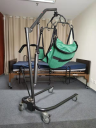
Match Transfer Sling Type to Mobility Level and Clinical Needs
Non–Weight-Bearing vs. Partial-Weight-Bearing: Selecting U-Slings, Full-Body Slings, or Sit-to-Stand Slings
The patient’s weight-bearing status is the primary clinical determinant for safe sling selection. For individuals who are non–weight-bearing—such as those with complete lower-body paralysis, recent spinal surgery, or unstable pelvic fractures—a full-body sling provides comprehensive, hammock-like support across the trunk, pelvis, and legs. Its extended back height and head/shoulder support are essential for patients with limited trunk control, minimizing shear forces and safeguarding skin integrity during lifts.
Patients who can actively assist and bear partial weight—typically those recovering from hip or knee arthroplasty, or with mild neuromuscular impairment—may safely use a sit-to-stand sling. This design wraps securely around the lower back and thighs, enabling upright, cooperative transfers while preserving functional mobility.
A U-sling serves as an effective intermediate option: it supports the back and upper thighs without under-buttock padding, making it faster to apply and ideal for patients with strong upper-body strength who require frequent, short-distance repositioning (e.g., bed-to-chair). Matching sling design to objective weight-bearing capacity—not perceived ability—reduces fall risk, prevents pressure injury, and ensures caregiver safety.
Using Standardized Assessments (Berg Balance Scale, RAI-MDS) to Guide Transfer Sling Selection
Relying on subjective judgment alone introduces variability and potential safety gaps in sling selection. Validated tools like the Berg Balance Scale (BBS) and the Resident Assessment Instrument–Minimum Data Set (RAI-MDS) provide objective, evidence-based benchmarks that align sling support with functional capacity.
The BBS evaluates static and dynamic balance across 14 tasks; scores below 20 indicate high fall risk and strongly support full-body sling use, whereas scores above 40 suggest sufficient stability for sit-to-stand or U-sling assistance. Similarly, the RAI-MDS functional assessment includes standardized items on transfer independence, bed mobility, and gait, helping clinicians distinguish between moderate-assistance needs (best met by U- or toileting slings) and total-dependence scenarios requiring full-body support.
Integrating these assessments into routine care planning promotes consistency, strengthens documentation for regulatory compliance (e.g., CMS, Joint Commission), and builds caregiver confidence through data-informed decisions.
Align Transfer Sling Design with Specific Daily Care Tasks
Toileting & Bathing Slings: Prioritizing Dignity, Skin Protection, and Ease of Use
Toileting and bathing slings are engineered not just for function—but for human-centered care. A toileting sling features a large, open-bottom design that enables unobstructed access for hygiene, clothing changes, and perineal care—preserving dignity and reducing exposure time. Minimal fabric at the hip line allows rapid positioning and removal, lowering physical demand on caregivers.
For bathing, water-resistant, quick-drying materials prevent prolonged skin moisture, which is critical for preventing intertrigo and pressure-related skin breakdown. Advanced models incorporate padded leg loops and breathable mesh panels to evenly distribute load and reduce pressure on bony prominences—especially over the sacrum and greater trochanters—during wet transfers.
Ease of use is built in: color-coded attachment loops, intuitive sizing indicators, and symmetrical strap layouts help caregivers apply slings correctly on the first attempt—every time—without compromising safety or comfort.
Repositioning & Lateral Transfers: Why Back Height and Leg Support Affect Stability and Safety
Stability during repositioning and lateral transfers hinges on two biomechanical features: back height and leg support configuration. A high-back, full-back sling—extending to the axillae—provides maximal trunk and head control for patients with severe weakness, impaired consciousness, or inability to maintain upright posture. It prevents posterior sliding and safeguards airway positioning during supine-to-lateral moves.
Conversely, U-shaped or split-leg slings with adjustable, padded thigh loops promote a semi-reclined, centered center-of-mass position—ideal for lateral transfers where weight shift must be controlled and predictable. Properly fitted leg support cradles the femurs rather than compressing the popliteal space, distributing lift forces across broad tissue surfaces and minimizing shear at the sacrum and ischial tuberosities.
Together, appropriate back height and anatomically aligned leg support ensure the patient remains fully secured throughout the transfer arc—enhancing safety, reducing caregiver strain, and supporting long-term musculoskeletal health.
Ensure Accurate Sizing and Biomechanical Fit for Frail Elderly Anatomy
Critical Measurements Beyond Weight: Seated Torso Width, Coccyx-to-Axilla Distance, and Thigh Length
Weight capacity is only one parameter—and often the least informative—for selecting a transfer sling for frail older adults. Age-related changes—including kyphosis, loss of subcutaneous tissue, reduced muscle mass, and joint contractures—mean that standard “one-size-fits-most” assumptions increase risks of migration, pressure injury, and accidental disengagement.
Three anthropometric measurements are clinically essential:
- Seated torso width: Ensures the sling wraps snugly without gapping (risking lateral instability) or excessive compression (causing discomfort or nerve impingement).
- Coccyx-to-axilla distance: Determines vertical sling placement—critical for avoiding respiratory restriction, brachial plexus compression, or upward migration during lifting.
- Thigh length (greater trochanter to medial malleolus): Guides correct leg strap alignment to support the femur—not the knee or calf—ensuring pelvic neutrality and preventing anterior pelvic tilt or sacral loading during lifts.
These measurements should be taken with the patient seated in their typical posture and documented in the care plan. Skipping them compromises biomechanical fit, undermines skin protection goals, and elevates both patient and caregiver injury risk.
Evaluate Material, Safety, and Lift Compatibility for Long-Term Home or Facility Use
Reusable Padded vs. Disposable Mesh Transfer Slings: Balancing Skin Integrity, Hygiene, and Durability
Material choice significantly impacts clinical outcomes—particularly for elderly patients with fragile, incontinent, or compromised skin. Reusable padded slings—typically constructed from soft polyester-cotton blends—offer superior pressure redistribution and cushioning over bony prominences. However, they retain moisture and require strict laundering protocols: inadequate drying fosters bacterial growth, while repeated washing degrades elasticity and seam integrity over time.
Disposable mesh slings eliminate laundry burdens and cross-contamination concerns—making them especially valuable in infection-prone settings or for patients with active wounds, incontinence-associated dermatitis, or multidrug-resistant organisms. Their open-weave structure dries rapidly and avoids prolonged contact with wet skin. That said, they offer minimal padding and may cause friction-related irritation if used for extended positioning or repeated transfers without reapplication checks.
Both types maintain compatibility with standard ceiling and floor-based lifts, provided loop configurations (e.g., color-coded lengths, attachment angles) match the lift’s spreader bar design. Facilities should verify this alignment during procurement—not at point-of-use—to prevent misloading and equipment failure.
Ultimately, the decision rests on matching material properties to clinical priorities: reusable slings suit stable, low-risk patients in resource-rich environments; disposable slings serve best when hygiene, skin vulnerability, or workflow efficiency are paramount.
FAQ
What factors determine the type of sling a patient needs?
The primary factors include the patient's weight-bearing capacity, clinical condition, and daily care needs such as toileting, bathing, or repositioning. Standardized assessments like the Berg Balance Scale can guide decisions.
What is the purpose of specific sling measurements for elderly patients?
Measurements like seated torso width, coccyx-to-axilla distance, and thigh length ensure a proper fit, minimize risks like pressure injury, and enhance both patient safety and comfort.
When should reusable vs. disposable slings be used?
Reusable slings are better for stable, low-risk patients in controlled environments, while disposable slings are ideal in infection-prone settings or with patients who have fragile skin or wounds.
How do toileting and bathing slings differ?
Toileting slings have an open-bottom design for unobstructed access during hygiene care, while bathing slings use water-resistant materials to protect skin integrity during wet transfers.
Why is standardized assessment important in sling selection?
Using tools like the Berg Balance Scale and RAI-MDS ensures consistent, objective, and safety-driven decisions, particularly for patients with varying functional capacities.