
 EN
EN


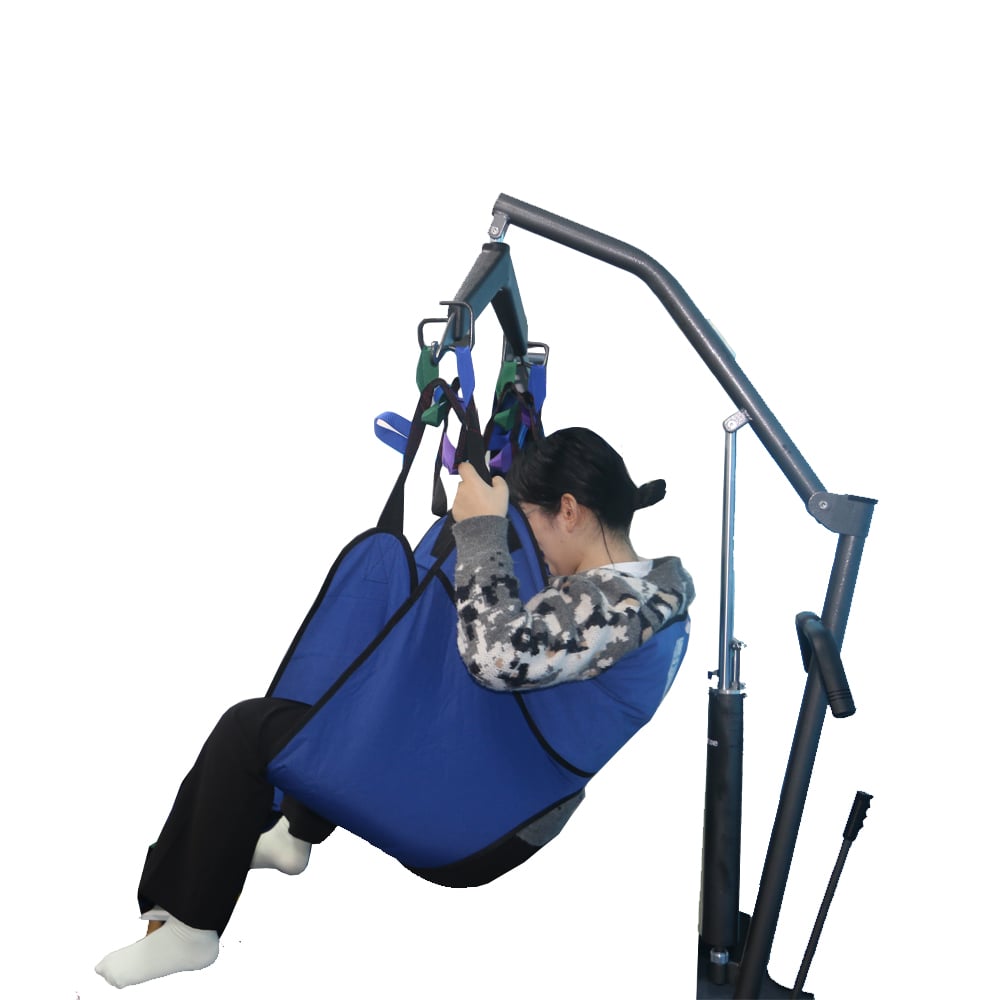
Understanding Different Types of Patient Lift Slings and Their Applications
Patient lift slings are important components in safe patient handling systems, helping caregivers transfer patients between beds, chairs, wheelchairs, and other surfaces more safely and efficiently.
However, different patient conditions and care environments require different sling designs. Choosing the right type of sling depends on factors such as patient mobility level, transfer requirements, comfort needs, and compatibility with lifting equipment.
Understanding the main types of patient lift slings and their applications can help healthcare providers, caregivers, and medical equipment buyers make more informed decisions.
Full Body Slings: Providing Comprehensive Patient Support
Full body slings are designed to provide support across a larger area of the patient’s body, including the shoulders, back, and thighs.
They are commonly used for patients who:
- Require full-body support during transfers
- Have limited mobility
- Need assistance moving between different surfaces
- Require additional positioning support
Some full body sling designs include head support to provide improved stability for patients with limited upper body control.
These slings are widely used in:
- Hospitals
- Rehabilitation facilities
- Long-term care environments
- Home care settings
When selecting a full body sling, important considerations include patient condition, weight capacity, sling size, and compatibility with the lifting system.
Toileting Slings: Supporting Personal Care Activities
Toileting slings are designed to support patients during personal hygiene and toileting procedures.
Compared with full body slings, toileting slings usually feature an open design that allows easier access for caregivers while maintaining necessary patient support.
They are commonly suitable for patients who:
- Have partial mobility
- Can maintain some upper body stability
- Need assistance during toileting activities
Proper fitting is essential to ensure patient comfort and safe positioning during transfers.
A suitable toileting sling can help improve caregiver efficiency while supporting patient dignity during personal care.
Transfer Slings: Supporting Daily Mobility Needs
Transfer slings are designed for patients who need assistance with repositioning or short-distance transfers.
They are commonly used for:
- Moving patients between surfaces
- Supporting rehabilitation activities
- Assisting caregivers during daily mobility tasks
Depending on the design, transfer slings may include features such as:
- Multiple attachment points
- Reinforced support areas
- Handles for caregiver assistance
The correct transfer sling design can help create a safer and more efficient transfer process for both patients and caregivers.
Mesh Slings: Suitable for Specific Healthcare Applications
Mesh slings are often selected for environments where breathability and moisture management are important.
The open structure of mesh materials provides advantages such as:
- Improved airflow
- Faster drying after washing
- Suitability for bathing-related transfers
Mesh slings are commonly used in situations where patients require frequent hygiene care or where quick drying is beneficial for daily workflow.
The choice between mesh and standard fabric should be based on patient requirements, transfer conditions, and cleaning procedures.
Key Factors When Selecting a Patient Lift Sling
Before choosing a patient lift sling, healthcare providers and buyers should consider several important factors.
Patient Condition
Different levels of mobility and body support requirements may require different sling designs.
Care Environment
Hospitals, rehabilitation centers, nursing facilities, and home care environments may have different priorities when selecting transfer equipment.
Equipment Compatibility
The sling should be compatible with the intended patient lift system, including attachment methods and weight capacity requirements.
Material and Maintenance
The sling material should match the expected cleaning procedures, frequency of use, and care environment.
Patient Comfort and Safety
Proper sizing and positioning are essential to support safe and comfortable patient transfers.
Conclusion
Patient lift slings are available in different designs to support various patient transfer requirements. Understanding the differences between full body slings, toileting slings, transfer slings, and specialized sling designs can help healthcare providers and medical equipment buyers select more suitable solutions.
As a manufacturer specializing in patient handling products, we focus on developing reliable transfer solutions with appropriate materials, functional designs, and application-focused features to support safer patient transfers in different healthcare environments.
FAQ
What is the difference between a full body sling and a toileting sling?
A full body sling provides more comprehensive support for patients who require greater assistance, while a toileting sling is designed to provide support while allowing easier access during personal care activities.
Are all patient lift slings compatible with every patient lift?
No. Compatibility depends on the sling design, attachment method, and specifications of the patient lift system. Always confirm compatibility before use.
How do I choose the right patient lift sling?
The selection should consider patient condition, transfer requirements, care environment, sling size, material, and equipment compatibility.
Table of Contents
- Understanding Different Types of Patient Lift Slings and Their Applications
- Full Body Slings: Providing Comprehensive Patient Support
- Toileting Slings: Supporting Personal Care Activities
- Transfer Slings: Supporting Daily Mobility Needs
- Mesh Slings: Suitable for Specific Healthcare Applications
- Key Factors When Selecting a Patient Lift Sling
- Conclusion
- FAQ