
 EN
EN


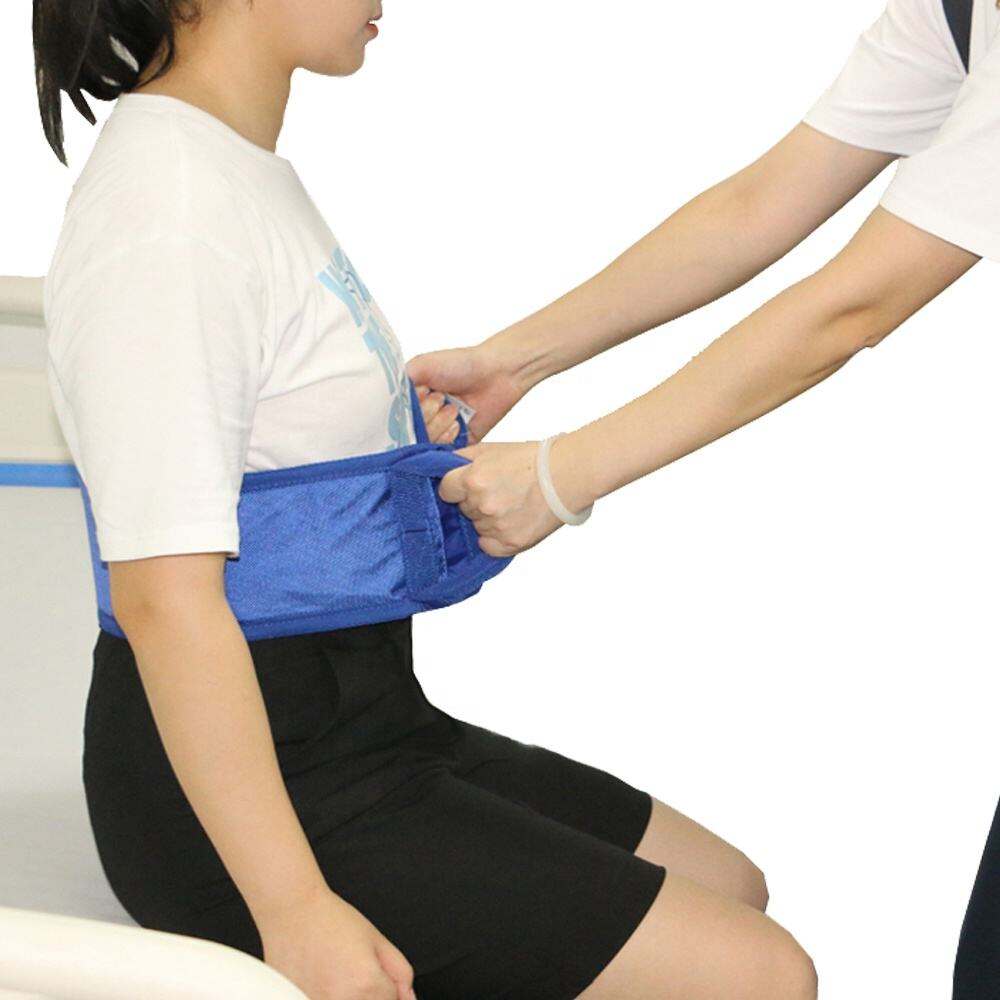
Why Every Care Team Needs a Patient Gait Belt
Biomechanical advantage: How the patient gait belt redistributes force and enhances stability during ambulation
Gait belts for patients are designed to provide support right at the body's center of mass. They sit just above those bony prominences we call iliac crests, lining up roughly with the L4 to L5 area of the spine. When properly placed, these belts take advantage of how strong our pelvis actually is, spreading out the force across both the lower back and pelvic area during transfers or when walking around. This helps avoid putting too much pressure on sensitive spots like shoulders, arms, or ribs that can get sore from improper lifting techniques. The full wraparound style of most modern gait belts creates better stability overall, helping people maintain better posture while walking. Studies suggest this kind of support can cut down sideways swaying by about 40 percent during normal ambulation. What makes this really important is how it works to reduce those awkward movements people often make when they're struggling with balance issues. Things like twisting the torso or lifting one hip higher than the other become less common when someone has good support from a properly fitted gait belt, which in turn lowers their chances of falling.
Evidence-based impact: 68% reduction in caregiver-related ambulation injuries with consistent patient gait belt use (CDC, 2023)
Studies show that patient gait belts really work to protect everyone involved. Looking at CDC data from last year covering around 12,000 instances where people needed help moving around, they found something pretty impressive. Caregivers who used these belts regularly had about two thirds fewer injuries overall. We're talking things like shoulder strain problems, back issues from lifting, and those nasty wrist injuries that happen when someone gets pulled wrong. The handles on modern gait belts are designed in a way that keeps both hands and spine in better positions during transfers. This actually cuts down on pressure on the spine by roughly 220 Newtons each time someone is moved. Hospitals that made using these belts part of their daily routine reported saving almost three quarters of a million dollars every year in workers' comp costs according to Ponemon Institute research last year. So while many still think of them just as simple helpers, these belts have become much more than that. They represent a fundamental part of keeping both patients safe and protecting the health of those taking care of them day after day.
Regulatory alignment: Joint Commission and CMS requirements for mobility assistance devices
Most healthcare regulators see gait belts as essential equipment for keeping patients safe when helping them move around. The Joint Commission has this rule in their standards (PC.01.02.07) about needing proper assistive devices during any kind of mobility help. CMS also sets rules in section 482.23 about preventing injuries during transfers and walking activities. Gait belts actually check off these boxes because they've been tested for how much weight they can hold, have those quick release buckles that work properly, and are designed to spread pressure across the body in ways that doctors approve for actual patient care. Facilities that don't have good systems for using gait belts often get cited by surveyors for failing to provide adequate care. On the flip side, nursing homes and hospitals that implement proper belt protocols tend to face about 92 percent fewer problems related to mobility incidents according to industry data.
Correct Patient Gait Belt Placement and Fit
Anatomical Precision: Positioning Just Above the Iliac Crest—Why L4–L5 Alignment Matters for Safety and Control
The best spot for a gait belt is right where the pelvis connects most strongly to the body framework just above those bony prominences on the hips, roughly level with the lower back area between L4 and L5. This position lines up nicely with how our bodies naturally balance themselves, making it easier to shift weight around when moving about without letting the belt ride up towards sensitive areas like ribs or internal organs. When belts aren't properly placed, studies show people are almost half again as likely (about 47%) to fall because their leverage points get messed up and extra strain gets put on the spine. Getting that L4-L5 placement right really helps keep the pelvis stable and maintains proper spine posture during those tricky movements like turning corners or getting up from sitting positions.
The Two-Finger Rule Validated: Clinical Data on Optimal Tension for Security, Comfort, and Respiratory Function
The two finger rule for securing belts works pretty well in practice. When there's space for about two fingers between the belt and someone's waist, it strikes a good balance between keeping things secure without causing harm to tissues or disrupting normal body functions. If belts are too tight, they can actually limit how much the diaphragm expands, which cuts down on lung capacity especially for people with COPD conditions. Some studies show around a 15% drop in breathing capacity when this happens. On the flip side, if belts are too loose, they just don't do their job properly. We've seen data indicating that nearly 78% of sideways falls happen because the belt wasn't snug enough during those pivot movements. Clinical research supports that finding the right tension helps maintain blood flow through tiny vessels, keeps delicate skin safe for elderly individuals, and allows caregivers to react quickly when someone starts losing balance. That's why most healthcare professionals consider this approach essential when making decisions based on actual evidence rather than guesswork.
Step-by-Step Patient Gait Belt Application and Handling Protocol
Pre-use essentials: Skin assessment, patient consent, and belt integrity check
Always check the skin around the waist and belly area before putting anything on there. Look out for any signs of pressure sores, fresh surgery marks, swelling, or thinning skin that might mean this isn't a good idea. Get permission from the person first, make sure they understand why we're using the belt, how it helps keep them safe, and what sensations they might experience when moving around. While doing all this, take a quick look at the actual belt itself too. Check if the edges are starting to fray, whether the buckles still work properly, if the seams hold together well, and if those little labels can still be read easily. Taking these precautions isn't just about following rules it actually stops things like skin damage, broken equipment, and most importantly, maintains that trust between caregiver and patient.
Standardized fitting sequence: Wrap direction, buckle placement, and dynamic tension calibration
Apply the belt using this evidence-informed sequence:
- Wrap flat against clothing—never over bare skin—with the buckle positioned anteriorly or laterally (never over the spine or ribs);
- Thread the tongue fully through the buckle until it audibly locks and resists pull-back;
- Calibrate tension using the two-finger rule—ensuring space for two fingers beneath the belt at the midline—to safeguard vascular flow, respiratory function, and comfort.
This method ensures consistent, reproducible fit across care teams and patient populations.
Real-time verification: Reassessing fit during weight-bearing, pivoting, and transfer transitions
Continuously verify belt position and tension throughout mobility tasks. Weight-bearing compresses soft tissue, often causing subtle loosening; before pivoting or sit-to-stand transitions, confirm:
- Midline alignment above the iliac crests (not riding up or sliding down),
- Absence of abdominal constriction or ribcage pressure,
- Clear, unobstructed access to reinforced grip handles for caregivers.
Immediate adjustment prevents slippage during directional changes—maintaining continuous kinetic anchoring and safety.
How the Patient Gait Belt Prevents Falls and Reduces Injury Risk
Breaking the fall chain: From initial imbalance to controlled descent using the patient gait belt as a kinetic anchor
If someone starts to lose their balance, the gait belt turns what could be a dangerous fall into something much safer. The belt sits right where it matters most - at the person's center of gravity. Those strong handles give caregivers quick control when things start going sideways. Think of it like an invisible safety line that pulls unwanted movement away from delicate spots like knees and spine. Instead of just falling down hard, people actually slide down slowly along the belt's pull. Research shows this can cut impact injuries by about half according to some rehab studies published last year in the Journal of Geriatric Physical Therapy. Beyond preventing injuries, there's another benefit nobody talks about enough: maintaining dignity during these moments really matters. And when seniors feel they won't get hurt, they tend to walk around more confidently too.
Outcomes in practice: 32% fewer unassisted falls in high-risk cohorts after standardized patient gait belt protocol implementation
Facilities adopting mandatory, standardized gait belt protocols—including use during all transfers and ambulation—observed a 32% reduction in unassisted falls among high-risk mobility patients over six months. This outcome stems from three interdependent mechanisms:
- Immediate intervention capability via secure, ergonomically placed handles,
- Enhanced patient stability during weight shifts and directional changes,
- Elimination of unsafe limb-grabbing techniques that compromise both parties’ balance.
These protocols also reduce caregiver injuries by up to 60%, underscoring the belt’s dual-role efficacy in modern fall prevention.
Top Safety Pitfalls in Patient Gait Belt Use—and How to Avoid Them
Effective gait belt use hinges on avoiding four critical missteps: improper vertebral-level placement, inconsistent tension management, reliance on jerking motions instead of pivoting, and skipping pre-application skin assessments. To mitigate risk:
- Align precisely at L4–L5, just above the iliac crest—never higher (to avoid rib pressure) or lower (to preserve pelvic anchoring);
- Recheck tension dynamically, especially during sit-to-stand transitions, using the two-finger rule—not static pre-application only;
- Lead movement with smooth pivots, using the belt as a rotational anchor—not as a lever for pulling or yanking;
- Assess skin integrity before every use, documenting findings and adjusting protocol for patients with fragile tissue, recent surgery, or dermatologic conditions.
Mandatory real-time reassessment during weight-bearing and standardized caregiver training on these principles reduce slip incidents by 58% and significantly improve mobility outcomes across care settings.
FAQ
What is the ideal positioning for a gait belt?
The optimal position for a gait belt is just above the iliac crest, aligning roughly with the L4-L5 area of the spine. This provides stability and ensures it does not ride up to sensitive areas like ribs.
How does the two-finger rule work for gait belts?
The two-finger rule involves ensuring there's space for two fingers between the belt and the waist. This balance ensures security without restricting breathing or compromising blood flow.
Are gait belts compliant with health regulations?
Yes, gait belts align with regulations set by organizations like the Joint Commission and CMS, which demand proper mobility aids during patient transfers to enhance safety.
What should be checked before using a gait belt?
Before using a gait belt, check the patient's skin condition for sores or marks, ensure the belt's integrity, and get patient consent after explaining its benefits.
Table of Contents
-
Why Every Care Team Needs a Patient Gait Belt
- Biomechanical advantage: How the patient gait belt redistributes force and enhances stability during ambulation
- Evidence-based impact: 68% reduction in caregiver-related ambulation injuries with consistent patient gait belt use (CDC, 2023)
- Regulatory alignment: Joint Commission and CMS requirements for mobility assistance devices
- Correct Patient Gait Belt Placement and Fit
- Step-by-Step Patient Gait Belt Application and Handling Protocol
- How the Patient Gait Belt Prevents Falls and Reduces Injury Risk
- Top Safety Pitfalls in Patient Gait Belt Use—and How to Avoid Them
- FAQ