
 EN
EN


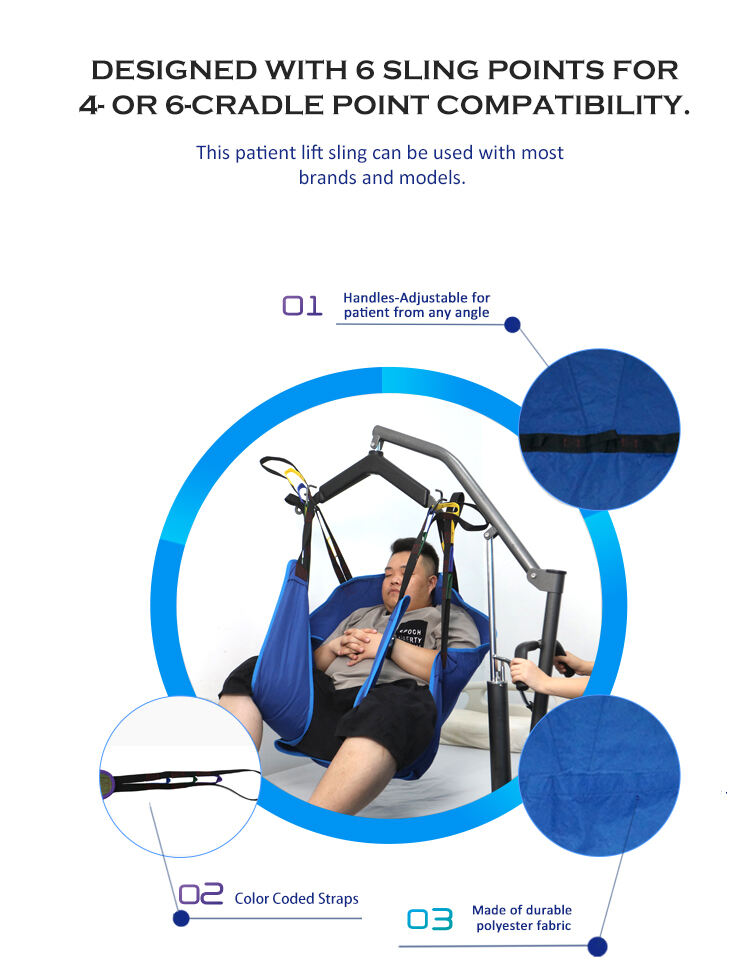
Understanding Safe Patient Handling and the Role of Reinforced Medical Lift Slings
What Is Safe Patient Handling and Mobility (SPHM)?
Safe Patient Handling and Mobility (SPHM) refers to evidence-based practices designed to protect both patients and healthcare workers during transfers, repositioning, and mobility tasks. These protocols minimize injury risks by replacing manual lifting with assistive devices—reinforced medical lift slings being a critical component of modern caregiving.
How Reinforced Medical Lift Slings Support SPHM Protocols
The reinforced slings help facilities meet SPHM standards because they're made from materials that resist tearing and have those ergonomic designs that spread out the weight better. Hospitals and care centers that started using these slings as part of their overall safety protocols saw something pretty impressive according to the Occupational Health Journal last year. Staff members experienced around 62% fewer injuries related to muscles and bones when moving patients compared to old fashioned manual lifting techniques. And there's another plus too. The way these slings contour around the body actually cuts down on skin tears during transfers by about 41%. Patients obviously feel more comfortable this way, but it's also just plain safer for everyone involved in the long run.
Injury Reduction Data from Use of Assistive Lifting Devices
Healthcare organizations adopting reinforced slings observe significant improvements:
- 58% decrease in worker compensation claims (CDC, 2022)
- 34% shorter patient recovery times due to fewer transfer-related complications
- 83% improvement in proper body alignment when using correctly sized slings
Case Study: SPHM Program Success in a Long-Term Care Facility
A 150-bed long-term care facility reduced staff turnover from 32% to 11% within 18 months after implementing standardized reinforced sling protocols and staff training. Patient falls during transfers dropped by 76%, and reported pain during mobility tasks decreased by 68%, demonstrating the tangible impact of consistent SPHM practices.
Matching Sling Type to Patient Mobility and Transfer Needs
Picking out the right sling starts by looking at how mobile the patient is and what kind of transfers they need. Full body slings that come with head support work best for people who can't walk at all, whereas those U-shaped ones are good for folks sitting down who only need a little help moving around. When dealing with situations where cleanliness matters a lot, like during baths or when caring for wounds, mesh slings coated with antimicrobial stuff dry fast and help keep infections away. Stand assist slings give support to people who can bear some weight themselves, helping them maintain better posture when standing up. According to a recent study from 2023, it's really important to match either loop style or clip style slings properly with whatever spreader bars the lifting equipment has so nothing comes loose accidentally.
| Material | Best Use Cases | Durability | Hygiene Consideration |
|---|---|---|---|
| Reinforced Fabric | Daily transfers, bariatric patients | High (2–3 years) | Requires weekly disinfection |
| Breathable Mesh | Bathing, moisture-prone environments | Moderate (1–2 years) | Quick-drying, reduced microbial growth |
| Disposable Polypropylene | Infection control scenarios | Single-use | Eliminates cross-contamination risks |
Weight Capacity and Sizing Guidelines for Optimal Fit
Before using any sling, check if it can handle both what the patient weighs and what the lifting equipment is rated for. When slings don't fit right, they actually raise the chance of pressure injuries by around 34%, according to research from SPHM Alliance last year. Getting good measurements across the thighs and around the torso makes all the difference here. For heavier patients, there are special bariatric slings with extra strong seams that go up to 1,000 pounds capacity. Kids need different sized slings too since their bodies are smaller, so finding ones that wrap securely without being too tight helps keep them stable during transfers.
Comparative Overview of Common Medical Lift Sling Types
- Full-Back Slings: Provide trunk stability for patients with limited core strength.
- Toileting Slings: Feature open designs for hygienic bathroom transfers.
- Adjustable Strap Slings: Allow customization for asymmetrical body shapes.
Custom-Fit vs. One-Size-Fits-All: Evaluating Practical Trade-offs
Custom-fit slings reduce repositioning errors by 27% but demand detailed assessments and higher initial investment. One-size options offer flexibility across diverse populations but may compromise alignment in extreme body types. Hybrid models with adjustable straps balance safety and operational efficiency, making them ideal for facilities with variable patient needs.
Maximizing Patient Safety During Transfers with Proper Sling Use
Best Practices for Safe Lifting and Transfer Procedures
Adherence to key protocols significantly reduces injury risks:
- Pre-transfer inspection of stitching and attachment points—practiced in 92% of hospitals with zero incident rates in 2023
- Weight distribution alignment using reinforced loops to prevent slippage
- Real-time communication among team members, which OSHA (2022) links to a 62% reduction in caregiver musculoskeletal injuries
These practices ensure SPHM compliance while supporting safe, efficient transfers tailored to individual patient needs.
Common Transfer Risks and How Reinforced Slings Reduce Them
Lateral transfers without reinforced slings result in 34% higher fall rates (Journal of Clinical Nursing, 2023). High-tensile polyester slings mitigate these risks through:
- Non-slip shoulder straps that maintain positioning
- Padded thigh supports to eliminate pressure points
- Load-rated metal rings ensuring secure connections to lift hardware
Facilities using these slings report 58% fewer skin tears and 41% fewer repositioning attempts compared to basic nylon alternatives.
Emerging Trend: Smart Medical Lift Slings with Load Sensors
Next-generation slings equipped with IoT sensors provide real-time feedback on:
- Uneven weight distribution (triggering alerts in 79% of imbalanced transfers in 2023 trials)
- Overcapacity risks via integrated load cells
- Prolonged pressure points using embedded pressure mapping
A 2024 pilot program using sensor-equipped devices demonstrated 83% faster error detection than manual checks, reducing transfer-related complications by 29% in post-stroke patients.
Durability, Materials, and Maintenance of Reinforced Medical Lift Slings
The structural integrity of medical lift slings directly affects patient safety and equipment longevity. Polyester variants retain 81% of their tensile strength after 1,000 wash cycles, outperforming mesh, which shows a 63% degradation rate (Journal of Biomechanics, 2023).
Fabric vs. Mesh vs. Disposable: Comparing Material Performance
| Material | Best Use Scenarios | Durability Benchmark | Hygiene Factor |
|---|---|---|---|
| Reinforced Polyester | Bariatric transfers | 800-lb capacity for 5+ years | Withstands industrial laundering |
| Nylon Mesh | Pool therapy & ambulation | 94% breathability score | Dries 2.3x faster than fabric |
| Disposable | Infection control units | Single-use protocol | Reduces HAI risk by 67% |
Wear Resistance and Longevity of Reinforced Sling Fabrics
Cross-stitched polyester slings exhibit 600% greater abrasion resistance than standard weaves, maintaining safety standards over 12,000+ transfer cycles (SPHM Alliance, 2023).
Reusable vs. Disposable Slings: Cost, Hygiene, and Environmental Impact
Reusable slings offer a 54% lower total cost over five years. However, disposables prevent an estimated 3.2 facility-acquired infections annually per 100 beds. While effective for infection control, they generate 83% more landfill waste monthly according to EPA data, highlighting the need for balanced selection based on clinical and environmental priorities.
Innovation Spotlight: Antimicrobial Coatings in Medical Lift Slings
Silver-ion treated slings inhibit 99.2% of MRSA colonization between cleanings and extend product lifespan by 40% (Infection Control Today, 2023), offering a durable solution for high-risk environments.
Training, Compliance, and Equipment Integration for Optimal Sling Use
Essential Training Components for Healthcare Staff
Structured training reduces caregiver injuries by 57% and improves patient outcomes (HoverTech, 2023). Effective programs include:
- Initial competency assessments for correct sling placement
- Annual refreshers on new technologies
- Hands-on practice across diverse patient profiles
- Documentation protocols for tracking usage and maintenance
Facilities using simulation-based training frameworks report 42% faster staff proficiency gains compared to lecture-only instruction.
Measuring Training Effectiveness Through Incident and Compliance Data
A 2024 OSHA case study revealed measurable improvements in organizations tracking compliance:
| Metric | Improvement | Timeframe |
|---|---|---|
| Lift-related incidents | 63% reduction | 6 months |
| Proper sling selection | 89% adherence | 1 year |
| Staff confidence scores | 55% increase | Quarterly |
Automated reporting tools now identify deviations from ISO 10535 safety standards during audits, enabling immediate corrective actions.
Simulation-Based Education for Real-World Sling Application
High-fidelity manikins with pressure sensors allow caregivers to practice transfers for bariatric and low-mobility patients. One regional hospital reduced skin tears by 38% after introducing quarterly simulation drills focused on securing leg supports, adjusting strap tension, and identifying early signs of material fatigue.
Ensuring Compatibility Between Medical Lift Slings and Equipment
FDA guidelines (2023) require compatibility testing between slings and lifts—even across manufacturers. Facilities using interoperable systems reduced equipment-related delays by 71% through:
- Digital inventory tags listing approved lift pairings
- Wall-mounted reference charts
- Monthly cross-departmental reviews
Validating sling-loop alignment with lift hook spacing remains essential to prevent failures during ceiling-mounted transfers.
FAQs
What is Safe Patient Handling and Mobility (SPHM)?
SPHM involves evidence-based practices aimed at ensuring safe transfers and movement of patients to protect both the patients and healthcare workers.
How do reinforced medical lift slings enhance patient safety?
They distribute weight better, reducing musculoskeletal injuries and skin tears during patient transfers, thereby enhancing patient and caregiver safety.
What are the types of medical lift slings available?
The common types include full-body, U-shaped, and stand-assist slings, each catering to specific mobility needs.
How important is it to match sling types with lifting equipment?
Proper matching ensures safety during use, as mismatches can result in slippage or accidents during patient transfers.
What training is necessary for healthcare staff using slings?
Training includes competency assessments, refreshers on technologies, hands-on practice, and adhering to documentation protocols for safe sling use.
Table of Contents
- Understanding Safe Patient Handling and the Role of Reinforced Medical Lift Slings
- Matching Sling Type to Patient Mobility and Transfer Needs
- Weight Capacity and Sizing Guidelines for Optimal Fit
- Comparative Overview of Common Medical Lift Sling Types
- Custom-Fit vs. One-Size-Fits-All: Evaluating Practical Trade-offs
- Maximizing Patient Safety During Transfers with Proper Sling Use
- Durability, Materials, and Maintenance of Reinforced Medical Lift Slings
- Fabric vs. Mesh vs. Disposable: Comparing Material Performance
- Wear Resistance and Longevity of Reinforced Sling Fabrics
- Reusable vs. Disposable Slings: Cost, Hygiene, and Environmental Impact
- Innovation Spotlight: Antimicrobial Coatings in Medical Lift Slings
- Training, Compliance, and Equipment Integration for Optimal Sling Use
- FAQs