
 EN
EN


Understanding the Role of the Patient Gait Belt in Mobility Safety
How a patient gait belt supports safe transfers and mobility
Gait belts for patients give caregivers something solid to hold onto when helping with tricky moves between bed and chair or walking support. These belts spread the weight over the torso area instead of putting all pressure on arms or legs, which cuts down on falls and keeps staff backs safe from strain. The medical community really pushes for using them properly during side transfers. Some rehab centers have seen around 40-45% drop in slips since they started incorporating gait belts regularly into their routines instead of relying solely on hands-on help.
Safety benefits across clinical and home care settings
Gait belts work wonders everywhere from hospital hallways all the way to home bathrooms. When someone is recovering after a stroke, these belts make walking practice much safer because they let patients slowly adjust how much weight they put on each leg. Caregivers at home find them indispensable too, especially when helping folks get to the bathroom or climb stairs safely. A recent survey from 2023 showed something interesting about this tool's impact. Out of those who used gait belts regularly, roughly two thirds said they felt more confident handling their daily movements without constant assistance.
When and why proper application enhances patient safety
Getting good results really depends on where it's placed correctly. The best spot is right against those lower ribs or upper part of the pelvis area. Don't put it over clothes that are too loose or any kind of medical gear either. When someone doesn't position this right, they lose almost 60% of their control over what they're doing. Studies looking at how bodies move back this up, which explains why nearly nine out of ten hospitals require staff to get trained on using these belts properly. When used the right way, what starts as just another piece of equipment becomes something actually useful for safety, especially important when dealing with patients who might suddenly shift around or make unexpected movements.
Critical Design Features of Effective Patient Gait Belts
Handle Design: Impact on Caregiver Grip and Control
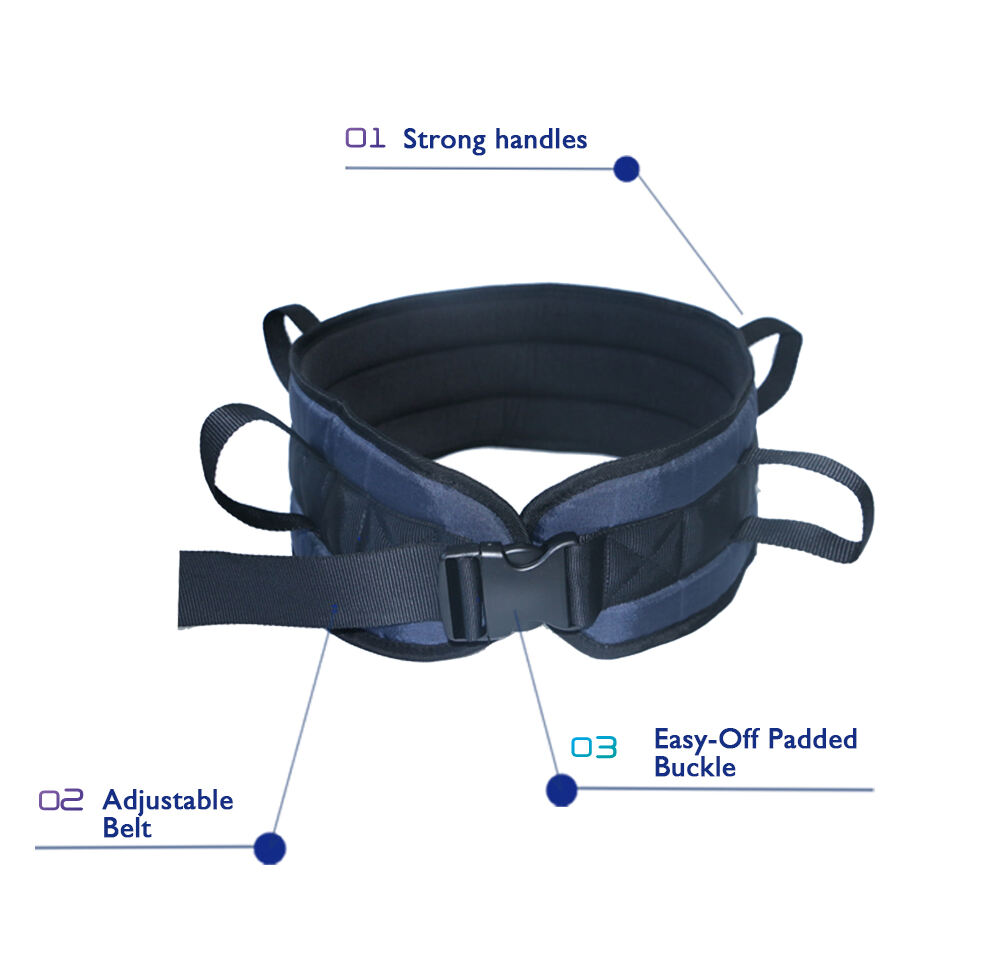
How handles are placed on gait belts and what they feel like makes a big difference in keeping transfers safe. The best gait belts come with around three or four strong handles covered in silicone that doesn't slip, so caregivers can keep their hands firmly on them when helping someone move sideways. According to research published last year in the Biomechanics Safety Journal, these textured areas cut down on slipping problems by almost half compared to regular nylon handles. When handles are positioned correctly on these belts, it actually helps prevent back injuries for caregivers who do lots of transfers throughout their shifts. One study found that good handle placement reduces back strain injuries by nearly 40% over time.
Buckle Types (Metal, Plastic, Quick-Release) and Safety Performance
| Buckle Type | Break Strength | Best Use Case |
|---|---|---|
| Metal | 900-1,200 lbs | Bariatric transfers |
| Plastic | 600-800 lbs | Standard patient mobility |
| Quick-release | 400-600 lbs | Emergency scenarios |
The 2023 Mobility Aid Safety Report recommends quick-release buckles for acute care settings where rapid removal is critical, while metal buckles remain standard for bariatric applications. Plastic variants balance weight and durability for daily home care use.
Adjustability for Secure Fit During Dynamic Patient Movement
Effective gait belts accommodate 38-60 inch waist sizes through continuous adjustment systems. Dual-layer nylon webbing distributes tension evenly, preventing dangerous slippage even when patients shift mid-transfer. Research confirms adjustable belts reduce lateral tilt incidents by 41% compared to fixed-size models, especially during chair-to-bed transitions.
Material, Durability, and Infection Control Considerations
Comparison of materials: Cotton, nylon, and synthetic blends
Cotton gait belts provide breathability but lack the tensile strength of synthetic alternatives, showing 27% faster material fatigue compared to nylon blends (Rutala et al. 2021). Nylon’s moisture-resistant properties make it ideal for frequent sanitization, while advanced polymer blends offer antimicrobial benefits without sacrificing flexibility.
Wipeable and antimicrobial gait belts for hygiene-critical environments
Nonporous surfaces reduce pathogen retention by up to 68% compared to textured materials according to healthcare material selection guidelines. Antimicrobial treatments like silver-ion coatings demonstrate 99.4% effectiveness against MRSA in controlled trials, meeting clinical sterilization standards for high-risk environments.
Long-term durability and cleaning requirements in clinical use
Daily disinfection protocols degrade cotton belts 3.2x faster than synthetic counterparts, per AORN’s 2022 survey of 412 care facilities. Look for double-stitched seams and buckles rated for 500+ sterilization cycles to maintain safety standards. Heat-sealed edges prevent fraying while ensuring compatibility with wipe-down disinfectants.
Gait Belt Sizes: Pediatric, Standard, and Bariatric Options
Effective patient gait belts require precise sizing to balance safety and comfort. Three primary size categories address distinct needs:
- Pediatric belts (18-24" waist) support children and petite adults with weight capacities up to 100 lbs
- Standard belts (30-48" waist) accommodate 80% of adult patients, offering 250-300 lb weight limits
- Bariatric belts (50-60" waist) provide 400-500 lb capacity with reinforced stitching for plus-sized individuals
Adjustable nylon webbing allows up to 60% size variance within each category, minimizing pressure points while maintaining grip integrity during transfers.
Proper Placement for Optimal Leverage and Patient Comfort
Positioning the gait belt 2-3 inches above the iliac crest ensures optimal biomechanical advantage for caregivers. A 2023 ergonomics study found proper placement reduces lateral patient sway by 34% compared to hip-level fastening. Wide, padded belts (3-4") distribute force evenly, preventing skin shear injuries common in prolonged transfers.
Accommodating Diverse Body Types Without Compromising Safety
Modern patient gait belts address anatomical variations through:
- Contoured designs adapting to abdominal protrusions or surgical sites
- Asymmetric buckle placement avoiding colostomy bags or catheters
- Low-profile hardware preventing pressure injuries in seated patients
For patients exceeding standard sizing, dual-clasp systems allow tandem belt use, maintaining safety protocols without custom equipment.
Best Practices and Safety Protocols for Patient Gait Belt Use
Step-by-Step Guide to Safe Patient Gait Belt Application and Use
Getting started with the gait belt means wrapping it around the waist area right above where the hips sit, leaving enough space so that two fingers can fit comfortably between the belt and the person's body. The buckle needs to be fastened at the front for quick release if needed during emergencies. When caregivers hold onto the special handles, they should angle their hands about halfway between straight ahead and sideways while keeping their backs straight. This simple adjustment actually cuts down on back pain by roughly 30 percent compared to when someone bends incorrectly. As for moving patients around, focus on supporting the lower part of the body instead of yanking them upwards. Doing things this way makes accidents much less likely, cutting fall risks down by almost half according to what we've seen in practice settings.
Contraindications and High-Risk Scenarios Requiring Alternative Support
Avoid gait belts entirely for patients with:
- Abdominal wounds or recent surgery
- Severe osteoporosis (vertebral fracture risk increases by 5" in stage 4 cases)
- Unstable spinal fractures (risk of neurological damage)
In these scenarios, use sit-to-stand lifts or air-assisted transfer systems. The CDC clinical guidelines for safe patient handling recommend mechanical aids for patients exceeding 35% weight-bearing capacity loss.
Common Mistakes and How to Avoid Them in Daily Practice
A 2023 study of 1,200 healthcare facilities found 68% of gait belt incidents resulted from:
- Loose fit: Leads to 53% of belt slippage cases
- Buckle behind patient: Delays emergency release by 4-7 seconds
- Over-reliance on belt: 22% of caregivers improperly used gait belts as primary support for non-ambulatory patients
When Gait Belts May Compromise Safety: Recognizing Limitations
Patient gait belts lack effectiveness for:
- Patients with <50% trunk control (use full-body harnesses instead)
- Severe agitation/dementia (risk of paradoxical restriction)
- Morbid obesity (belt edges can dig into soft tissue)
As noted in a 2023 Johns Hopkins mobility study, 19% of falls occurred when gait belts were used beyond their intended scope-primarily with patients requiring two-person assist protocols.
FAQ Section
What is a gait belt used for?
A gait belt is used to assist in the safe transfer and mobility of patients, providing caregivers with a secure grip to support patients during movements such as bed-to-chair transfers or walking.
How does the handle design impact patient safety?
Handle design impacts safety by improving the caregiver's grip, thus reducing the risk of slipping and avoiding back strain when handling patients.
What are the contraindications for using a gait belt?
Contraindications include patients with abdominal wounds, severe osteoporosis, or unstable spinal fractures, where mechanical aids might be recommended instead.
Can a gait belt be used for all patients?
No, gait belts are not ideal for patients with less than 50% trunk control or severe agitation and are not suitable for morbidly obese individuals without adaptation.
Table of Contents
- Understanding the Role of the Patient Gait Belt in Mobility Safety
- Critical Design Features of Effective Patient Gait Belts
- Material, Durability, and Infection Control Considerations
- Gait Belt Sizes: Pediatric, Standard, and Bariatric Options
- Proper Placement for Optimal Leverage and Patient Comfort
- Accommodating Diverse Body Types Without Compromising Safety
-
Best Practices and Safety Protocols for Patient Gait Belt Use
- Step-by-Step Guide to Safe Patient Gait Belt Application and Use
- Contraindications and High-Risk Scenarios Requiring Alternative Support
- Common Mistakes and How to Avoid Them in Daily Practice
- When Gait Belts May Compromise Safety: Recognizing Limitations
- FAQ Section
- What is a gait belt used for?
- How does the handle design impact patient safety?
- What are the contraindications for using a gait belt?
- Can a gait belt be used for all patients?