
 EN
EN


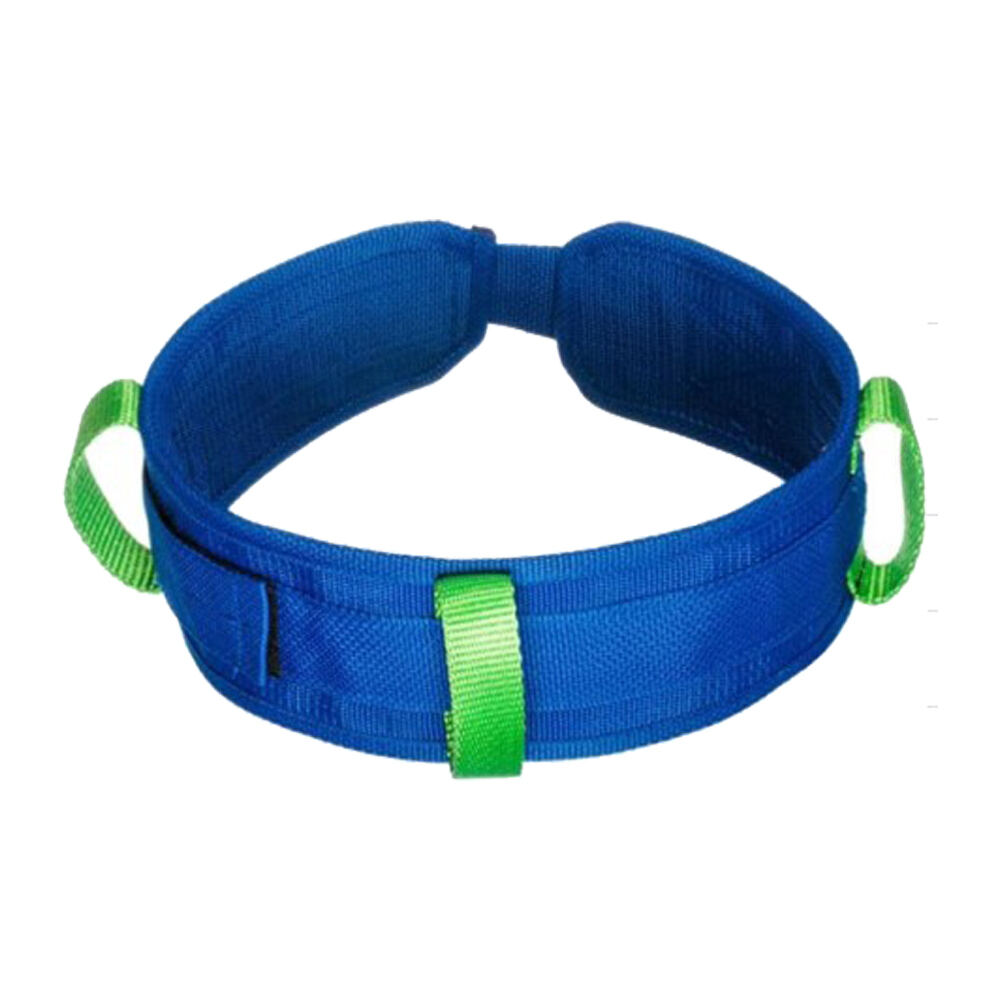
Core Safety Principles: Balancing Patient Stability and Caregiver Ergonomics
Why patient gait belt safety requires dual focus - not just restraint, but biomechanical support
Designing good patient gait belts needs to balance two main goals at once: keeping patients stable when moving them around, but also making sure caregivers don't get hurt. Old school methods focused too much on holding patients down, which actually made things worse because caregivers would compensate by twisting their bodies awkwardly, putting extra stress on their backs and shoulders. Research into ergonomics shows something interesting though - when weight is distributed properly across the belt, it cuts down on the twisting force applied to lower back vertebrae by about 28 percent during side transfers. What works best combines solid patient support with special force spreading tech that redirects movement through the legs where muscles are stronger instead of letting it hit the spine. This kind of alignment stops those dangerous twist and lift motions that cause roughly 62% of all injuries among health workers, as reported in the latest national injury stats from the Occupational Safety Council in 2023.
Evidence from VA pilot: How padded wide-handle patient gait belts reduced caregiver injuries by 41%
VA recently rolled out a major program showing just how much better equipment design can cut down on injuries. Facilities swapped out regular transfer belts for ones with these big 3 inch padded handles and special shoulder anchors that spread out the weight. After making this change, they saw musculoskeletal injuries drop dramatically from 7.2 cases to only 4.2 per 10,000 patient moves. These wider handles actually encourage people to use their whole palm rather than just grabbing with fingertips, which takes pressure off delicate tendons and spreads it across stronger hand muscles. At the same time, those curved padding sections really helped prevent skin damage when moving elderly patients who have thin, fragile skin from sitting to standing positions. The results speak for themselves too. With about 41 percent fewer injuries happening, hospitals saved around $740,000 each year according to some research from the Ponemon Institute back in 2023. Plus, mobility got better overall for residents who are at higher risk of falling.
Material and Construction: Durability, Cleanability, and Clinical Context Fit
Antimicrobial, launderable fabrics vs. wipeable synthetics - matching patient gait belt materials to care setting
When picking out materials for patient gait belts, healthcare workers need to think about how durable they are, how well they resist infections, and whether they fit into daily routines at the facility. Fabrics that can be washed repeatedly with built-in germ fighting qualities work really well for places like nursing homes. These polyester cotton mixtures hold up after many trips through the industrial washer and even stand up to heat sterilization methods. That's why they're so popular there since each belt tends to stay with one resident most of the time. On the other hand, synthetic materials coated with something like polyurethane offer quick cleaning options between different patients in hospital wards. Their smooth surface doesn't absorb fluids easily which makes disinfecting much faster. But there's a catch too. These synthetic options tend to break down quicker when exposed to harsh chemicals over and over again. So facilities should weigh these pros and cons carefully depending on what kind of setting they operate in day to day.
| Care Setting | Recommended Material | Key Advantage | Durability Consideration |
|---|---|---|---|
| Long-term care | Antimicrobial launderable | Reusability & comfort | 2-year lifespan with daily washes |
| High-turnover units | Wipeable synthetics | Instant disinfection | Replace every 6-12 months |
Avoid materials compromised for cost-substandard belts risk tearing during transfers. Prioritize clinical context: surgical units need fluid-resistant synthetics, while rehabilitation centers benefit from breathable, pressure-diffusing fabrics. Proper material selection reduces cross-contamination and extends equipment lifespan.
Ergonomic Design Essentials: Proper Fit, Padding, and Handle Integration for Safe Transfers
The two-finger rule and skin injury prevention: Why width, padding distribution, and handle placement matter in a patient gait belt
How a patient gait belt is designed ergonomically really affects safety when moving patients around. There's something called the "two finger rule" for determining belt width. If the belt is too narrow, it can pinch the skin and cause pressure sores. But when there's space for about two fingers between the skin and the belt material, studies from Clinical Biomechanics back in 2023 showed this actually cuts down on shear forces by roughly 60%. The padding matters too. It needs to spread out the weight properly over those bony areas. Putting too much padding right against the spine actually raises the chance of falls. Better results come from padding that's spaced out along the sides of the hips. And don't forget where the handles are placed either because that makes all the difference in how stable everything stays during transfers.
- Vertical alignment with the caregiver’s center of gravity prevents back strain
- Offset positioning reduces wrist torsion during lateral transfers
- Textured grips minimize slippage even with sweaty palms
When handles are poorly positioned, caregivers often end up twisting their bodies into uncomfortable positions while assisting patients. This leads to dropped items happening much more frequently than they should in rehab centers, studies show around 34% more often actually. The width and padding need to work for different body sizes too. Regular belts just don't cut it for larger patients, which can lead to problems like the belt rolling over during movement or causing painful skin injuries. Getting all these details right makes the belt feel like part of the caregiver's own body rather than something that gets in the way when helping someone move around safely.
Mechanical Reliability: Buckle Systems That Prevent Slippage and Ensure Controlled Release
Quick-release vs. tiger-teeth locking: Evaluating trade-offs in patient gait belt security and ease of use
Quick release buckles are great when fast unfastening matters most during emergencies, especially helpful for folks at risk of falling. But there's a catch they sometimes pop open by accident if someone presses too hard on the wrong spot. Tiger teeth locks work differently with those interlocking metal parts that basically stop any sliding around. These need a real firm push from the thumb to come undone though. That means no unwanted openings for sure, but might slow things down when time is tight during transfers. The big dilemma here is finding that sweet spot between safety and ease of use. Most clinics focused on keeping patients safe from falls go with tiger teeth systems. Places where getting people moving quickly matters more tend to stick with quick releases instead. When picking which type works best, always consider what each individual patient actually needs combined with how well caregivers know their way around these different fastening methods.
Safe Use Protocol: Contraindications and the 5-Point Pre-Use Inspection Checklist
Before using a patient gait belt, clinical staff must screen for contraindications to prevent injury. Common exclusions include abdominal wounds, fractures involving the torso or pelvis, and severe osteoporosis where pressure application risks vertebral collapse. Patients with aortic aneurysms or recent abdominal surgeries also require alternative transfer methods.
A mandatory 5-point pre-use inspection ensures mechanical reliability:
- Material integrity: Scan for fraying, tears, or weakened stitching
- Buckle function: Verify secure locking and smooth quick-release mechanisms
- Cleanliness: Confirm disinfection compliance for clinical settings
- Padding condition: Check for compression gaps or uneven distribution
- Size adjustment: Ensure adequate length for safe waist circumference fitting
Strict adherence to this protocol reduces fall risks during transfers by addressing both patient physiology and equipment readiness.
FAQ Section
What is the main purpose of a patient gait belt?
The main purpose of a patient gait belt is to aid in the safe transfer and movement of patients while ensuring the safety and ergonomics of caregivers by preventing injuries during transfers.
How does the design of gait belts affect caregiver safety?
The design of gait belts affects caregiver safety by distributing weight properly to reduce twisting forces and ensuring ergonomic alignment to prevent back and wrist strain. Proper handle positioning allows for safe and efficient patient transfers.
What materials are commonly used for patient gait belts?
Common materials for patient gait belts include antimicrobial, launderable fabrics for long-term care settings and wipeable synthetics for quick disinfection in high-turnover units.
What should be checked during the pre-use inspection of a gait belt?
The pre-use inspection should check for material integrity, buckle function, cleanliness, padding condition, and proper size adjustment to ensure safety and reliability.
Table of Contents
- Core Safety Principles: Balancing Patient Stability and Caregiver Ergonomics
- Material and Construction: Durability, Cleanability, and Clinical Context Fit
- Ergonomic Design Essentials: Proper Fit, Padding, and Handle Integration for Safe Transfers
- Mechanical Reliability: Buckle Systems That Prevent Slippage and Ensure Controlled Release
- Safe Use Protocol: Contraindications and the 5-Point Pre-Use Inspection Checklist
- FAQ Section